Search
Search projects, tokens and protocols by name or address
 Katana
There are impactful changes and part of the information might be outdated.
Badges
About
Katana is a Layer 2 specializing on DeFi. Its unique architecture combines an OP stack base with Agglayer shared bridge interoperability and OP-Succinct SP1 validity proofs.
- Compromising ≥75% of the Security Council should be the only way (other than bugs) for a rollup to indefinitely block an L2→L1 message (e.g. a withdrawal) or push an invalid L2→L1 message (e.g. an invalid withdrawal) with a <7d exit window.


Badges
About
Katana is a Layer 2 specializing on DeFi. Its unique architecture combines an OP stack base with Agglayer shared bridge interoperability and OP-Succinct SP1 validity proofs.








The section shows the operating costs that L2s pay to Ethereum.
This section shows how much data the project publishes to Ethereum over time. It leaves out data posted to other data-availability (DA) layers. The project currently posts data to Ethereum.
This section shows how "live" the project's operators are by displaying how frequently they submit transactions of the selected type. It also highlights anomalies — significant deviations from their typical schedule.
Anomalies in the past 30 days
All liveness anomalies detected for this project in the last 30 days, helping you review recent downtime and availability issues.
No Tx data submissions were performed for 2h 23m (from until ). These typically occur every 7m 52s on average.
No Tx data submissions were performed for 15m 48s (from until ). These typically occur every 7m 52s on average.
No Tx data submissions were performed for 20m (from until ). These typically occur every 7m 52s on average.
Funds can be stolen if
- the contracts or their dependencies (e.g. AggLayerGateway) receive a malicious code upgrade. There is no delay on upgrades,
- the state transition validity proof cryptography is broken or implemented incorrectly,
- A malicious state transition is finalized by activating the permissioned optimistic mode,
- the proposer routes proof verification through a malicious or faulty verifier by specifying an unsafe route id,
- the pessimistic proof cryptography is broken or implemented incorrectly.
Funds can be lost if
In the event of a sequencerA party responsible for ordering and executing transactions on the rollup. The sequencer verifies transactions, compresses the data into a block, and submits the data related to it to enable state reconstruction to Ethereum L1 as a single transaction. The data can be either transaction data or state diffs. failure, users can force transactions to be included in the project’s chain by sending them to L1Layer 1 (L1) is a blockchain that is self-reliant on its validator set for its security and consensus properties. Ethereum is an example of a layer 1. Blockchains started receiving the moniker of layer 1 once layer 2 became a meaningful area of development.. There can be up to a 12h delay on this operation.
STARKs and SNARKs are zero knowledge proofs that ensure state correctness. STARKs proofs are wrapped in SNARKs proofs for efficiency. SNARKs require a trusted setupGeneration of a piece of data that must then be used for some cryptographic protocol to run. Generating this data requires some secret information. The "trust" comes from the fact the secret must be destroyed after the ceremony, otherwise cryptographic properties of the protocol could be broken. Once the data is generated, and the secrets are forgotten, no further participation from the creators of the ceremony is required. There are two types of trusted setups for SNARKs: (i) trusted setup per circuit where it is generated from scratch for each circuit, (ii) trusted universal setup per proving system where it can be used for several circuits..
All of the data needed for proof construction is published on Ethereum L1Layer 1 (L1) is a blockchain that is self-reliant on its validator set for its security and consensus properties. Ethereum is an example of a layer 1. Blockchains started receiving the moniker of layer 1 once layer 2 became a meaningful area of development..
There is no window for users to exit in case of an unwanted upgrade since the Security CouncilA Security Council is a sufficiently decentralized set of members that is able to upgrade a system. A properly set up Security Council consists of at least 8 members with a threshold greater than 75%. What 'sufficiently decentralized' means is fundamentally subjective and ETHBEAT evaluates each case individually. A Security Council is allowed to instantly upgrade Stage 1 rollups. can remove the delay on upgrades.
Only the whitelisted proposers can publish state rootsA cryptographic hash succinctly representing a state using a Merkle tree. on L1Layer 1 (L1) is a blockchain that is self-reliant on its validator set for its security and consensus properties. Ethereum is an example of a layer 1. Blockchains started receiving the moniker of layer 1 once layer 2 became a meaningful area of development., so in the event of failure the withdrawals are frozen.
All data required for proofs is published on chain
All the data that is used to construct the system state is published on chain in the form of cheap blobsThe data that a rollup publishes to its L1/data availability (DA) layer. They consist of the L2 transactions that are rolled up, along with some metadata. Blobs are introduced as a new transaction type within Ethereum with EIP-4844, and has rollup scaling specifically in mind. Blobs persist on Ethereum’s Beacon Chain ephemerally. or calldata. This ensures that it will be available for enough time.
EthereumKatana uses the Agglayer CDK in CDK-opgeth-zkrollup configuration. This combines an OP-Succinct zk rollupA blockchain that inherits consensus and data availability from another blockchain called L1. Rollups enable trust minimized bridges with the base layer via proof systems, either optimistic or zero-knowledge. A rollup without a bridge, or without considering the bridge, is called a sovereign rollup. base with Agglayer shared bridgeA message-passing protocol between two blockchains. At its most basic, a token bridge consists of a smart contract which can escrow funds on one side of the bridge, and instruct the release or minting of corresponding assets on the other side, but bridges could also support arbitrary messages. How these instructions are validated is a critical factor in assessing the trust assumptions of a bridge. interoperabilityRefers to the capability of different blockchain networks to communicate and share data. It enables the transfer of assets and information between blockchains, facilitating functionality and collaboration between blockchain ecosystems.. Both parts are verified in a single nested proof using the Succinct Sp1Verifier. This proof is called the pessimistic proof by Agglayer which contains 1) the bridge accounting proof proving only the secure accounting of the Agglayer shared bridge and can have 2) a reference to an ‘aggchain proof’, which can define additional programs to be proven. In the case of Katana, these are the op-succinct blockAn ordered list of transactions and chain-related metadata that gets bundled together and published to the L1/DA layer. Nodes execute the transactions contained within blocks to change the rollup chain’s state. Protocol rules dictate what constitutes a valid block, and invalid blocks are skipped over. range proofs as an aggregated proof proving the state transitions of the L2Layer 2 (L2) is a category of technical solutions aimed to scale the base layer in a trust minimized way. This category includes solutions like rollups as well as state channels and plasma. Other solutions are able to scale further, but with the introduction of additional trust assumptions, which are therefore not trust minimized. Sometimes the term Layer 2 is used to refer to include these solutions too, like validiums and optimiums, but to distinguish between trust minimized and non trust minimized solutions they are often referred to as "light" L2s, opposed to "strong" L2s like rollups., resulting in a full validity proofThe output of a cryptographic proving system attesting to correct computation. ZK-Rollups use succinct validity proofs (also called zero-knowledge proofs) to prove a batch of rollup transactions and blocks were properly executed. Validity proofs are submitted to a verifier, such as an Ethereum smart contract, which accepts them if properly constructed. of L2 execution and agglayer bridge accounting.
Each update to the rollupA blockchain that inherits consensus and data availability from another blockchain called L1. Rollups enable trust minimized bridges with the base layer via proof systems, either optimistic or zero-knowledge. A rollup without a bridge, or without considering the bridge, is called a sovereign rollup. state must be accompanied by a ZK proof that ensures that the new state was derived by correctly applying a series of valid user transactions to the previous state. These proofs are then verified on Ethereum by a smart contract.
Funds can be stolen if the state transition validity proof cryptography is broken or implemented incorrectly.
Funds can be stolen if A malicious state transition is finalized by activating the permissioned optimistic mode.
Funds can be stolen if the proposer routes proof verification through a malicious or faulty verifier by specifying an unsafe route id.
Funds can be frozen if the AggLayerGateway is unable to route proof verification to a valid verifier.
The pessimistic proofs that are used to prove correct accounting in the Agglayer shared bridgeA message-passing protocol between two blockchains. At its most basic, a token bridge consists of a smart contract which can escrow funds on one side of the bridge, and instruct the release or minting of corresponding assets on the other side, but bridges could also support arbitrary messages. How these instructions are validated is a critical factor in assessing the trust assumptions of a bridge. (minimum security guarantee) are using the SP1 zkVM by Succinct.
Funds can be stolen if the pessimistic proof cryptography is broken or implemented incorrectly.

Program hashes
Scroll sideways to see the whole diagram, or tap to open it.
The regular upgrade process for all system contracts (shared and L2Layer 2 (L2) is a category of technical solutions aimed to scale the base layer in a trust minimized way. This category includes solutions like rollups as well as state channels and plasma. Other solutions are able to scale further, but with the introduction of additional trust assumptions, which are therefore not trust minimized. Sometimes the term Layer 2 is used to refer to include these solutions too, like validiums and optimiums, but to distinguish between trust minimized and non trust minimized solutions they are often referred to as "light" L2s, opposed to "strong" L2s like rollups.-specific) starts at the Polygon
The Polygon
Furthermore, the Polygon
Past upgrades
The metrics include upgrades on the currently used proxy contracts. Historical proxy contracts and changes of such are not included.
Ossification
Contracts our research team classifies as critical form the project's critical perimeter. Its clock starts at the ossification genesis, and every critical change resets it (changes within 24 hours count as one). The ossification score is the share of recorded code-bug exploits whose exploited code was younger than this perimeter is today. Battle-tested exposure is the value secured, summed over that unchanged period.
Discovery updates
8changesThe Safe katana:0xd0673F989bc3BA9314d0AAF28BfC84e99B7898CC added a sixth signer with the threshold unchanged, now 3 of 6. It upgrades the L2 predeploys directly and the L2 bridge and exit root manager through the L2Timelock. Its signers now equal those of the Safe at the same address on Ethereum (Polygon Multisig 2, eth:0xd0673F989bc3BA9314d0AAF28BfC84e99B7898CC). The Safe eth:0x261a25ec6c396389B75B6b22BD4A8227070E3B50, which only receives the yield of the vault bridge tokens, removed two of its four owners and is now 1 of 2. One of its two owners, the Katana yieldRecipient Multisig, swapped one signer and stays 2 of 6. No code or threshold changes.
The Safe katana:0xd0673F989bc3BA9314d0AAF28BfC84e99B7898CC added a sixth signer with the threshold unchanged, now 3 of 6. It upgrades the L2 predeploys directly and the L2 bridge and exit root manager through the L2Timelock. Its signers now equal those of the Safe at the same address on Ethereum (Polygon Multisig 2, eth:0xd0673F989bc3BA9314d0AAF28BfC84e99B7898CC).
The Safe eth:0x261a25ec6c396389B75B6b22BD4A8227070E3B50, which only receives the yield of the vault bridge tokens, removed two of its four owners and is now 1 of 2. One of its two owners, the Katana yieldRecipient Multisig, swapped one signer and stays 2 of 6.
No code or threshold changes.
| - | Status: DELETED |
| EOA (eth:0x227D9Ea843910Edd305c42e7bB9Ce6D9f369238c) | |
| +++ description: None | |
| contract Safe (eth:0x261a25ec6c396389B75B6b22BD4A8227070E3B50) [GnosisSafe] { | |
| +++ description: None | |
| values.$members.0: | |
| - | "eth:0x3e86A8bcAF0A96DD16Ec8160532DA13b2C0f6e21" |
| values.$members.1: | |
| - | "eth:0x227D9Ea843910Edd305c42e7bB9Ce6D9f369238c" |
| values.multisigThreshold: | |
| - | "1 of 4 (25%)" |
| + | "1 of 2 (50%)" |
| } | |
| - | Status: DELETED |
| contract Safe (eth:0x3e86A8bcAF0A96DD16Ec8160532DA13b2C0f6e21) [GnosisSafe] | |
| +++ description: None | |
| contract Katana yieldRecipient Mulsitig (eth:0x67C912fF560951526BffDff66dFbD4DF8AE23756) [GnosisSafe] { | |
| +++ description: None | |
| values.$members.5: | |
| - | "eth:0x227D9Ea843910Edd305c42e7bB9Ce6D9f369238c" |
| + | "eth:0x73D8846324B30477EA3Ac055589e40F39DE497F8" |
| } | |
| contract SafeL2 (katana:0xd0673F989bc3BA9314d0AAF28BfC84e99B7898CC) [GnosisSafe] { | |
| +++ description: None | |
| values.$members.0: | |
| + | "katana:0x21a2Db679b4e9f6183E3143cc7Dcfef955b400a6" |
| values.multisigThreshold: | |
| - | "3 of 5 (60%)" |
| + | "3 of 6 (50%)" |
| } | |
8changesConduit Multisig 1 removed a member and is 4 of 10. The Safe eth:0xFA58659F64a393A6E1A548ABc70Ad2CfE1e8f9Cb, a member of the 1/4 Safe eth:0x261a25ec6c396389B75B6b22BD4A8227070E3B50, swapped three members and removed two, now 2 of 10. Thresholds are unchanged.
Conduit Multisig 1 removed a member and is 4 of 10. The Safe eth:0xFA58659F64a393A6E1A548ABc70Ad2CfE1e8f9Cb, a member of the 1/4 Safe eth:0x261a25ec6c396389B75B6b22BD4A8227070E3B50, swapped three members and removed two, now 2 of 10. Thresholds are unchanged.
| contract Conduit Multisig 1 (eth:0x4a4962275DF8C60a80d3a25faEc5AA7De116A746) [GnosisSafe] { | |
| +++ description: None | |
| values.$members.8: | |
| - | "eth:0xa0C600a6e85bf225958FFAcC70B5FDDF9A059038" |
| values.multisigThreshold: | |
| - | "4 of 11 (36%)" |
| + | "4 of 10 (40%)" |
| } | |
| contract Safe (eth:0xFA58659F64a393A6E1A548ABc70Ad2CfE1e8f9Cb) [GnosisSafe] { | |
| +++ description: None | |
| values.$members.3: | |
| - | "eth:0x1319279d6d54dB0883F7bAF822191c7184Db0c3d" |
| + | "eth:0x97E3e9e9d5087CBf1fF5e7A68402F86e9C13B99b" |
| values.$members.6: | |
| - | "eth:0xF045025C845E786E343Df30cC6f67ec6BB822b34" |
| values.$members.7: | |
| - | "eth:0x6B2Ba82994A1606605af1F11E50DA0b2B0cee6e6" |
| + | "eth:0xb20d2bA1C74744a0Df7852f62BF802AbC8e4d91E" |
| values.$members.8: | |
| - | "eth:0x6624307a4f672ec5C289fBA196952902BB518dc0" |
| + | "eth:0x5F050BECf0746E4E95C4dB3254eA0E9a56268C0d" |
| values.$members.11: | |
| - | "eth:0xdEb97974dfCC73178672205A1eadDc2BDeAc1Bd4" |
| values.multisigThreshold: | |
| - | "2 of 12 (17%)" |
| + | "2 of 10 (20%)" |
| } | |
2changesPolygon Multisig 2, the SystemConfig owner, raised the minimum L2 base fee from 0.001 to 0.05 gwei and the operator fee scalar from 100000 to 600000. Under Jovian the operator fee is gasUsed × scalar × 100 wei, so it rises from 0.01 to 0.06 gwei per gas. The minimum execution cost rises tenfold, from 0.011 to 0.11 gwei per gas, before the L1 data fee. Fee parameters only, no change to code or trust assumptions. The allocator EOA of the Morpho vault behind vbETH emptied the vault's supply queue, so it accepts no deposits. New ETH deposits (555 ETH, 21% of the vbETH backing) stay idle in the vbETH reserve and earn no yield. The vbETH reserve fields are now ignored in watch mode.
Polygon Multisig 2, the SystemConfig owner, raised the minimum L2 base fee from 0.001 to 0.05 gwei and the operator fee scalar from 100000 to 600000. Under Jovian the operator fee is gasUsed × scalar × 100 wei, so it rises from 0.01 to 0.06 gwei per gas. The minimum execution cost rises tenfold, from 0.011 to 0.11 gwei per gas, before the L1 data fee. Fee parameters only, no change to code or trust assumptions.
The allocator EOA of the Morpho vault behind vbETH emptied the vault’s supply queue, so it accepts no deposits. New ETH deposits (555 ETH, 21% of the vbETH backing) stay idle in the vbETH reserve and earn no yield. The vbETH reserve fields are now ignored in watch mode.
| contract SystemConfig (eth:0xb6e1f8B589A14B79DDD3aD7F0589AB548c70C174) [opstack/SystemConfig] { | |
| +++ description: Contains configuration parameters such as the Sequencer address, gas limit on this chain and the unsafe block signer address. | |
| values.minBaseFee: | |
| - | 1000000 |
| + | 50000000 |
| values.operatorFeeScalar: | |
| - | 100000 |
| + | 600000 |
| } | |
2changesThe Polygon Labs Engineering/Security Multisig added an EOA signer and is now 2/8. It upgrades and administers the MigrationManager and is a signer of the three 2/3 Katana vaultBridge multisigs.
The Polygon Labs Engineering/Security Multisig added an EOA signer and is now 2/8. It upgrades and administers the Migration
| contract Polygon Labs Engineering/Security Multisig (eth:0x9d851f8b8751c5FbC09b9E74E6e68E9950949052) [GnosisSafe] { | |
| +++ description: None | |
| values.$members.0: | |
| + | "eth:0xFD621b24968F64E3f14E7a099538ae13e1381417" |
| values.multisigThreshold: | |
| - | "2 of 7 (29%)" |
| + | "2 of 8 (25%)" |
| } | |
3changesYearn Strategist Multisig (a member of Katana vaultBridge Multisig 2) removed two signers, now 3 of 6.
Yearn Strategist Multisig (a member of Katana vaultBridge Multisig 2) removed two signers, now 3 of 6.
| contract Yearn Strategist Multisig (eth:0x16388463d60FFE0661Cf7F1f31a7D658aC790ff7) [GnosisSafe] { | |
| +++ description: None | |
| values.$members.3: | |
| - | "eth:0xFcc3796370e1538F8cC60bec19A8be5457f2C74F" |
| values.$members.4: | |
| - | "eth:0xFafFb75e14faFf9f11315E44a2E54A22872c7a34" |
| values.multisigThreshold: | |
| - | "3 of 8 (38%)" |
| + | "3 of 6 (50%)" |
| } | |
The system has a centralized operator
Only a trusted sequencerA party responsible for ordering and executing transactions on the rollup. The sequencer verifies transactions, compresses the data into a block, and submits the data related to it to enable state reconstruction to Ethereum L1 as a single transaction. The data can be either transaction data or state diffs. is allowed to submit transaction batches. A mechanism for users to submit their own batches is currently disabled. Only a trusted proposerIn the context of L2s, the actor that proposes a claimed state root on L1. The term is also used in the context of Ethereum to refer to the actor that proposes a new block. can propose and prove new state rootsA cryptographic hash succinctly representing a state using a Merkle tree..
Funds can be frozen if the permissioned proposer fails to publish state roots to the L1.
Users can force any transaction
Because the state of the system is based on transactions submitted on the underlying host chain and anyone can submit their transactions there it allows the users to circumvent censorship by interacting with the smart contract on the host chain directly. The self-sequencing delay is configured offchain and the nodeA software client that participates in the network. source and config are unverified.
Regular messaging
The user initiates L2Layer 2 (L2) is a category of technical solutions aimed to scale the base layer in a trust minimized way. This category includes solutions like rollups as well as state channels and plasma. Other solutions are able to scale further, but with the introduction of additional trust assumptions, which are therefore not trust minimized. Sometimes the term Layer 2 is used to refer to include these solutions too, like validiums and optimiums, but to distinguish between trust minimized and non trust minimized solutions they are often referred to as "light" L2s, opposed to "strong" L2s like rollups.->L1Layer 1 (L1) is a blockchain that is self-reliant on its validator set for its security and consensus properties. Ethereum is an example of a layer 1. Blockchains started receiving the moniker of layer 1 once layer 2 became a meaningful area of development. messages by submitting a regular transaction on this chain. When the blockAn ordered list of transactions and chain-related metadata that gets bundled together and published to the L1/DA layer. Nodes execute the transactions contained within blocks to change the rollup chain’s state. Protocol rules dictate what constitutes a valid block, and invalid blocks are skipped over. containing that transaction is settled, the message becomes available for processing on L1. ZK proofs are required to settle blocks.
Shared bridge and Pessimistic Proofs
Polygon Agglayer uses a shared bridgeA message-passing protocol between two blockchains. At its most basic, a token bridge consists of a smart contract which can escrow funds on one side of the bridge, and instruct the release or minting of corresponding assets on the other side, but bridges could also support arbitrary messages. How these instructions are validated is a critical factor in assessing the trust assumptions of a bridge. escrow for Rollups, Validiums and external chains that opt in to participate in interoperabilityRefers to the capability of different blockchain networks to communicate and share data. It enables the transfer of assets and information between blockchains, facilitating functionality and collaboration between blockchain ecosystems.. Each participating chain needs to provide zk proofs to access any assets in the shared bridge. In addition to the full execution proofs that are used for the state validation of Rollups and Validiums, accounting proofs over the bridges state (Polygon calls them ‘Pessimistic Proofs’) are used by external chains (‘cdk-sovereign’ and aggchains). Using the SP1 zkVMA special type of zk proving system that proves the correctness of state transitions of a virtual machine. Computation is represented by a program in a specific instruction language, it can have private and public inputs and public outputs. Most of zkVMs are STARKs. by Succinct, projects without a full proof systemThe infrastructure that allows projects to verify their state transitions. It is composed by onchain verifiers and offchain provers. The main two flavors are optimistic and ZK proof systems, but they can be combined in a hybrid model. In general though, if a system is able to accept state roots optimistically, even if it has a ZK component, it is considered an optimistic proof system. on Ethereum or custom proof systems are able to share the bridge with the zkEVM Agglayer projects.
Funds can be lost if the accounting proof system for the bridge (pessimistic proofs, SP1) is implemented incorrectly.
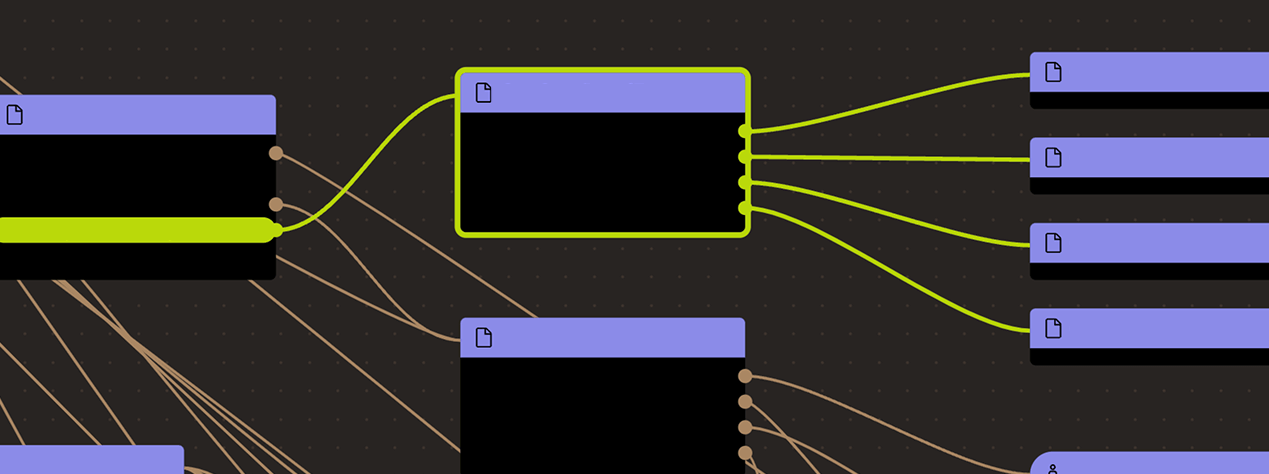
Ethereum
Actors
A Multisig with 5/9 threshold.
- Can upgrade with 3d delay
- AgglayerGateway Timelock with 3d delay (no delay if in emergency state) → Shared
Proxy Admin - AgglayerBridge Timelock with 3d delay (no delay if in emergency state) → Shared
Proxy Admin - AgglayerManager Timelock with 3d delay (no delay if in emergency state) → Shared
Proxy Admin - AgglayerGER Timelock with 3d delay (no delay if in emergency state) → Shared
Proxy Admin
- AgglayerGateway Timelock with 3d delay (no delay if in emergency state) → Shared
- Can interact with AgglayerGateway
- add new routes from proof selector to verifierAn entity in a ZK-Rollup, often a smart contract, that verifies zero-knowledge proofs submitted by a prover. / pessimisticVkey for pessimistic proofs with 3d delay Timelock with 3d delay (no delay if in emergency state)
- add or update default aggchain verification keys (aggchainVkey) for any given selectors
- change the aggchainSigners and threshold (a multisig used for permissioned state transitions)
- freeze routes from proof selector to verifier / pessimisticVkey for pessimistic proofs
- Can interact with AgglayerBridge
- upgrade the implementation of wrapped tokens deployed by the bridgeA message-passing protocol between two blockchains. At its most basic, a token bridge consists of a smart contract which can escrow funds on one side of the bridge, and instruct the release or minting of corresponding assets on the other side, but bridges could also support arbitrary messages. How these instructions are validated is a critical factor in assessing the trust assumptions of a bridge. with 3d delay Timelock with 3d delay (no delay if in emergency state)
- Can interact with AgglayerManager
- deploy new projects that use predefined rollupA blockchain that inherits consensus and data availability from another blockchain called L1. Rollups enable trust minimized bridges with the base layer via proof systems, either optimistic or zero-knowledge. A rollup without a bridge, or without considering the bridge, is called a sovereign rollup. types (implementations) and connect them or other Agglayer chains to the Polygon
Rollup Manager - manage all access control roles, add new rollup types (which are implementation contracts that can then be upgraded to by connected projects), update any connected projects to new rollup types, migrate to pessimistic proofs and rollback batches, connect existing rollups to the Polygon
Rollup Manager with 3d delay Timelock with 3d delay (no delay if in emergency state) - manage parameters like fees for all connected projects, set the trusted aggregator, stop the emergency state, update projects and obsolete rollup types
- deploy new projects that use predefined rollupA blockchain that inherits consensus and data availability from another blockchain called L1. Rollups enable trust minimized bridges with the base layer via proof systems, either optimistic or zero-knowledge. A rollup without a bridge, or without considering the bridge, is called a sovereign rollup. types (implementations) and connect them or other Agglayer chains to the Polygon
- Can interact with Timelock
- propose, cancel and execute transactions in the timelock, manage all access control roles and change the minimum delay with 6d delay or with 3d delay Timelock with 3d delay (no delay if in emergency state) with 3d delay (no delay if in emergency state) - or - acting directly with 3d delay (no delay if in emergency state)
Participants (9):
0xEB5E…EA72,0xAb35…235E,0xf02B…D4B2,0xdFEd…56Da,0xffbf…3238,0xeD44…dB37,0x516e…46B7,0x2161…d417,0x8B9F…782B



A Multisig with 3/6 threshold. Member of Katana vaultBridge Multisig 1, Katana vaultBridge Multisig 2, Katana vaultBridge Multisig 3.
- Can upgrade with no delay
- L1ERC721Bridge ProxyAdmin
- L1
Cross Domain Messenger ProxyAdmin - OptimismPortal2 ProxyAdmin
- Superchain
Config ProxyAdmin - L1
Standard Bridge ProxyAdmin - DelayedWETH ProxyAdmin
- Optimism
Mintable ERC20 Factory ProxyAdmin - Anchor
State Registry ProxyAdmin - SystemConfig ProxyAdmin
- Dispute
Game Factory ProxyAdmin
- Can interact with AggchainFEP
- change verification keys (aggregationVkey, range
Vkey Commitment, aggchainVkey) and the rollup Config Hash, manage multisig signers for permissioned state transitions and change critical configs for state validation - toggle the ‘optimisticMode’
- change verification keys (aggregationVkey, range
- Can interact with SystemConfig
- it can update the preconfer address, the batch submitter (SequencerA party responsible for ordering and executing transactions on the rollup. The sequencer verifies transactions, compresses the data into a block, and submits the data related to it to enable state reconstruction to Ethereum L1 as a single transaction. The data can be either transaction data or state diffs.) address and the gasA virtual fuel used to execute smart contracts on a rollup. The EVM (or other VM within the rollup) uses an accounting mechanism to correspond the consumption of gas to the consumption of computing resources, and to limit the consumption of computing resources. configuration of the system
- Can interact with Dispute
Game Factory - set the dispute game implementation and initial bond for any game type
- Can interact with AddressManager
- set and change address mappings ProxyAdmin
The central shared managing contract for Polygon Agglayer chains. This contract coordinates chain deployments and proof validation. All connected Layer 2s can be globally paused by activating the ‘Emergency State’. This can be done by the Polygon
- Can upgrade with no delay
- AggchainFEP
A Multisig with 2/5 threshold.
- Can interact with Superchain
Config - pause the OptimismPortal and L1
Cross Domain Messenger of Katana (pauses expire automatically after the configured pause expiry)
- pause the OptimismPortal and L1

A Multisig with 6/8 threshold.
- Can interact with AgglayerManager
- activate the emergency state in the Polygon
Rollup Manager and in the shared bridgeA message-passing protocol between two blockchains. At its most basic, a token bridge consists of a smart contract which can escrow funds on one side of the bridge, and instruct the release or minting of corresponding assets on the other side, but bridges could also support arbitrary messages. How these instructions are validated is a critical factor in assessing the trust assumptions of a bridge. immediately, effectively pausing all projects connected to them and making system contracts instantly upgradable
- activate the emergency state in the Polygon
Participants (8):
0xFe45…2e4b,0xaF46…261D,0xBDc2…FEFf,0x4c16…8891,0x3ab9…D622,0x49c1…0E86,0x9F7d…86A0,0x2188…1C28A Multisig with 3/5 threshold.
- Can interact with AgglayerManager
- deploy new projects that use predefined rollupA blockchain that inherits consensus and data availability from another blockchain called L1. Rollups enable trust minimized bridges with the base layer via proof systems, either optimistic or zero-knowledge. A rollup without a bridge, or without considering the bridge, is called a sovereign rollup. types (implementations) and connect them or other Agglayer chains to the Polygon
Rollup Manager
- deploy new projects that use predefined rollupA blockchain that inherits consensus and data availability from another blockchain called L1. Rollups enable trust minimized bridges with the base layer via proof systems, either optimistic or zero-knowledge. A rollup without a bridge, or without considering the bridge, is called a sovereign rollup. types (implementations) and connect them or other Agglayer chains to the Polygon
A Multisig with 2/3 threshold.
- Can upgrade with no delay
- vbWBTC ProxyAdmin
- vbETH ProxyAdmin
- vbUSDT ProxyAdmin
A Multisig with 2/8 threshold. Member of Katana vaultBridge Multisig 1, Katana vaultBridge Multisig 2, Katana vaultBridge Multisig 3.
- Can upgrade with no delay
- Migration
Manager ProxyAdmin
- Migration
Participants (8):
0xFD62…1417,0xf02B…D4B2,0xFB2a…63eb,0x6Ab8…3890,0xeD44…dB37,0xffbf…3238,0xdFEd…56Da,0x2161…d417A Multisig with 2/3 threshold.
- Can upgrade with no delay
- vbUSDS ProxyAdmin
A Multisig with 2/3 threshold.
- Can upgrade with no delay
- vbUSDC ProxyAdmin
A Multisig with 3/6 threshold. Member of Katana vaultBridge Multisig 2.
A Multisig with 4/10 threshold.
Participants (10):
0x9402…53F2,0xcdC9…4853,0xA9FC…8d09,0x6BB4…83A6,0x2103…911c,0x8117…E7Ac,0xA073…bda2,0xF331…647D,0xefCf…dD5C,0x4D80…5BAe

A Multisig with 2/6 threshold. Member of Safe.
A Multisig with 3/9 threshold. Member of Katana vaultBridge Multisig 3.
Participants (9):
0x1710…04f6,0x44e6…5871,0xfB3e…Ce3c,0x7307…6E4B,0x1936…F16d,0xd824…B2Db,0x4c23…27DE,0x5868…488d,0x1Dc4…35A3A Multisig with 2/10 threshold. Member of Safe.
Participants (10):
0xfB94…6066,0x2826…7A1f,0x9f02…840C,0x97E3…B99b,0x6Ab8…3890,0x573D…8b91,0xb20d…d91E,0x5F05…8C0d,0x54DF…9277,0xFAc8…66a3- Can interact with SystemConfig
- Allowed to commit transactions from the current layer to the host chain
- Can interact with AggchainFEP
- sign state transitions (replaces state validation for this aggchain)
- Can interact with AgglayerManager
- Permissioned to post new state rootsA cryptographic hash succinctly representing a state using a Merkle tree. and global exit roots accompanied by ZK proofs
Katana
Actors
A Multisig with 2/5 threshold.
- Can upgrade with 12h delay
- Agglayer
Bridge L2 L2Timelock with 12h delay (no delay if in emergency state) → ProxyAdmin - Global
Exit Root Manager L2 Sovereign Chain L2Timelock with 12h delay (no delay if in emergency state) → ProxyAdmin
- Agglayer
- Can interact with Agglayer
Bridge L2 - manage token mappings and deployments
- own and upgrade default L2Layer 2 (L2) is a category of technical solutions aimed to scale the base layer in a trust minimized way. This category includes solutions like rollups as well as state channels and plasma. Other solutions are able to scale further, but with the introduction of additional trust assumptions, which are therefore not trust minimized. Sometimes the term Layer 2 is used to refer to include these solutions too, like validiums and optimiums, but to distinguish between trust minimized and non trust minimized solutions they are often referred to as "light" L2s, opposed to "strong" L2s like rollups. token contracts deployed by the bridgeA message-passing protocol between two blockchains. At its most basic, a token bridge consists of a smart contract which can escrow funds on one side of the bridge, and instruct the release or minting of corresponding assets on the other side, but bridges could also support arbitrary messages. How these instructions are validated is a critical factor in assessing the trust assumptions of a bridge.
- pause the bridge
- unpause the bridge
- Can interact with Global
Exit Root Manager L2 Sovereign Chain - Can interact with L2Timelock
- propose, cancel and execute transactions in the timelock, manage all access control roles and change the minimum delay with 12h delay - acting directly with 12h delay (no delay if in emergency state)
A Multisig with 3/6 threshold.
- Can upgrade with no delay
- Deployer
Whitelist L2ProxyAdmin - L2
Cross Domain Messenger L2ProxyAdmin - GasPriceOracle L2ProxyAdmin
- L2
Standard Bridge L2ProxyAdmin - Sequencer
Fee Vault L2ProxyAdmin - Optimism
Mintable ERC20 Factory L2ProxyAdmin - L1BlockNumber L2ProxyAdmin
- L2ERC721Bridge L2ProxyAdmin
- L1Block L2ProxyAdmin
- L2
To L1 Message Passer L2ProxyAdmin - Optimism
Mintable ERC721 Factory L2ProxyAdmin - L2ProxyAdmin L2ProxyAdmin
- BaseFeeVault L2ProxyAdmin
- L1FeeVault L2ProxyAdmin
- Operator
Fee Vault L2ProxyAdmin - SchemaRegistry L2ProxyAdmin
- EAS L2ProxyAdmin
- Deployer
- Can upgrade with 12h delay
- Agglayer
Bridge L2 L2Timelock with 12h delay (no delay if in emergency state) → ProxyAdmin - Global
Exit Root Manager L2 Sovereign Chain L2Timelock with 12h delay (no delay if in emergency state) → ProxyAdmin
- Agglayer
- Can interact with Sequencer
Fee Vault - change the fee recipient, the minimum withdrawal amount and whether fees are withdrawn on L1Layer 1 (L1) is a blockchain that is self-reliant on its validator set for its security and consensus properties. Ethereum is an example of a layer 1. Blockchains started receiving the moniker of layer 1 once layer 2 became a meaningful area of development. or L2Layer 2 (L2) is a category of technical solutions aimed to scale the base layer in a trust minimized way. This category includes solutions like rollups as well as state channels and plasma. Other solutions are able to scale further, but with the introduction of additional trust assumptions, which are therefore not trust minimized. Sometimes the term Layer 2 is used to refer to include these solutions too, like validiums and optimiums, but to distinguish between trust minimized and non trust minimized solutions they are often referred to as "light" L2s, opposed to "strong" L2s like rollups.
- Can interact with BaseFeeVault
- Can interact with L1FeeVault
- Can interact with Operator
Fee Vault - Can interact with L2Timelock
- propose, cancel and execute transactions in the timelock, manage all access control roles and change the minimum delay with 12h delay - acting directly with 12h delay (no delay if in emergency state)
Collects the EIP-1559 base fees, which anyone can withdraw to the recipient on L1Layer 1 (L1) is a blockchain that is self-reliant on its validator set for its security and consensus properties. Ethereum is an example of a layer 1. Blockchains started receiving the moniker of layer 1 once layer 2 became a meaningful area of development. or L2Layer 2 (L2) is a category of technical solutions aimed to scale the base layer in a trust minimized way. This category includes solutions like rollups as well as state channels and plasma. Other solutions are able to scale further, but with the introduction of additional trust assumptions, which are therefore not trust minimized. Sometimes the term Layer 2 is used to refer to include these solutions too, like validiums and optimiums, but to distinguish between trust minimized and non trust minimized solutions they are often referred to as "light" L2s, opposed to "strong" L2s like rollups. once the minimum withdrawal amount is reached.
- Can interact with Operator
Fee Vault - receive fees
A Multisig with 3/6 threshold.
- Can interact with Sequencer
Fee Vault - receive fees
- Can interact with BaseFeeVault
- receive fees
- Can interact with L1FeeVault
- receive fees
- Can interact with Global
Exit Root Manager L2 Sovereign Chain - update the global exit root (GER) that is used for L2Layer 2 (L2) is a category of technical solutions aimed to scale the base layer in a trust minimized way. This category includes solutions like rollups as well as state channels and plasma. Other solutions are able to scale further, but with the introduction of additional trust assumptions, which are therefore not trust minimized. Sometimes the term Layer 2 is used to refer to include these solutions too, like validiums and optimiums, but to distinguish between trust minimized and non trust minimized solutions they are often referred to as "light" L2s, opposed to "strong" L2s like rollups. deposits
The current deployment carries some associated risks:
Funds can be stolen if the contracts or their dependencies (e.g. AggLayerGateway) receive a malicious code upgrade. There is no delay on upgrades.
Scroll sideways to see the whole diagram, or tap to open it.
Ethereum
Stores the configuration of the OP stack components and proof systemThe infrastructure that allows projects to verify their state transitions. It is composed by onchain verifiers and offchain provers. The main two flavors are optimistic and ZK proof systems, but they can be combined in a hybrid model. In general though, if a system is able to accept state roots optimistically, even if it has a ZK component, it is considered an optimistic proof system.. Specifies which game type is used for state validation, which currently is the Permissioned
- Roles:
- admin: ProxyAdmin; ultimately Polygon Multisig 2
Can be upgraded by: Polygon Multisig 2 with no delay
Contains configuration parameters such as the SequencerA party responsible for ordering and executing transactions on the rollup. The sequencer verifies transactions, compresses the data into a block, and submits the data related to it to enable state reconstruction to Ethereum L1 as a single transaction. The data can be either transaction data or state diffs. address, gas limitThe maximum amount of gas a transaction or block may consume. on this chain and the unsafe blockAn ordered list of transactions and chain-related metadata that gets bundled together and published to the L1/DA layer. Nodes execute the transactions contained within blocks to change the rollup chain’s state. Protocol rules dictate what constitutes a valid block, and invalid blocks are skipped over. signer address.
- Roles:
- admin: ProxyAdmin; ultimately Polygon Multisig 2
- batcherHash: EOA 1
- owner: Polygon Multisig 2
Can be upgraded by: Polygon Multisig 2 with no delay


This is NOT the shared Superchain
- Roles:
- admin: ProxyAdmin; ultimately Polygon Multisig 2
- guardian: Katana Foundation Engineering/Security Multisig
Can be upgraded by: Polygon Multisig 2 with no delay
A verifierAn entity in a ZK-Rollup, often a smart contract, that verifies zero-knowledge proofs submitted by a prover. gateway for pessimistic proofs. Manages a map of chains and their verifier keys and is used to route proofs based on the first 4 bytes of proofBytes data in a proof submission. The SP1 verifier is used for all proofs.
- Roles:
- addPpRoute: Timelock; ultimately Polygon
Admin Multisig - admin: Shared
Proxy Admin; ultimately Polygon Admin Multisig - aggchain
Default : PolygonVKey Admin Multisig - alMultisig: Polygon
Admin Multisig - freezePpRoute: Polygon
Admin Multisig
- addPpRoute: Timelock; ultimately Polygon
Can be upgraded by: PolygonAdminMultisig with 3d delay
The shared bridgeA message-passing protocol between two blockchains. At its most basic, a token bridge consists of a smart contract which can escrow funds on one side of the bridge, and instruct the release or minting of corresponding assets on the other side, but bridges could also support arbitrary messages. How these instructions are validated is a critical factor in assessing the trust assumptions of a bridge. contract, escrowing user funds sent to Agglayer chains. It is usually mirrored on each chain and can be used to transfer both ERC20 assets and arbitrary messages.
- Roles:
- admin: Shared
Proxy Admin; ultimately Polygon Admin Multisig - proxied
Tokens : Timelock; ultimately PolygonManager Admin Multisig
- admin: Shared
All supported tokens in this escrow are included in the value secured calculation.
Can be upgraded by: PolygonAdminMultisig with 3d delay
A merkle treeA hash-based data structure in which each leaf node is a hash of a block of data, and each non-leaf node is a hash of its children. The root of the tree is a cryptographic fingerprint of the entire data structure. Merkle trees (Merkle Patricia Tries) are used in Ethereum to efficiently store key-value pairs. storage contract aggregating state rootsA cryptographic hash succinctly representing a state using a Merkle tree. of each participating Layer 2Layer 2 (L2) is a category of technical solutions aimed to scale the base layer in a trust minimized way. This category includes solutions like rollups as well as state channels and plasma. Other solutions are able to scale further, but with the introduction of additional trust assumptions, which are therefore not trust minimized. Sometimes the term Layer 2 is used to refer to include these solutions too, like validiums and optimiums, but to distinguish between trust minimized and non trust minimized solutions they are often referred to as "light" L2s, opposed to "strong" L2s like rollups., thus creating a single global merkle root representing the global state of the Agglayer, the ‘global exit root’. The global exit root is synchronized to all connected Layer 2s to help with their interoperabilityRefers to the capability of different blockchain networks to communicate and share data. It enables the transfer of assets and information between blockchains, facilitating functionality and collaboration between blockchain ecosystems..
- Roles:
- admin: Shared
Proxy Admin; ultimately Polygon Admin Multisig
- admin: Shared
Can be upgraded by: PolygonAdminMultisig with 3d delay
A timelock with access control. In the case of an activated emergency state in the AgglayerManager, all transactions through this timelock are immediately executable. The current minimum delay is 3d.
- Roles:
- timelockAdmin: Polygon
Admin Multisig (no delay if in emergency state), Timelock (no delay if in emergency state); ultimately Polygon Admin Multisig (no delay if in emergency state)
- timelockAdmin: Polygon
This token contract uses a standard ‘vault bridgeA message-passing protocol between two blockchains. At its most basic, a token bridge consists of a smart contract which can escrow funds on one side of the bridge, and instruct the release or minting of corresponding assets on the other side, but bridges could also support arbitrary messages. How these instructions are validated is a critical factor in assessing the trust assumptions of a bridge. token’ implementation created by Agglayer CDK. It keeps deposited assets in a vault and issues an IOU token (Vault Bridge WBTC) which can be deposited to Agglayer. The underlying asset is generating yield, which does not accrue to the vbWBTC-IOU but is sent to Safe.
- Roles:
- admin: ProxyAdmin; ultimately Katana vaultBridge Multisig 1
Can be upgraded by: Katana vaultBridge Multisig 1 with no delay
This token contract uses a standard ‘vault bridgeA message-passing protocol between two blockchains. At its most basic, a token bridge consists of a smart contract which can escrow funds on one side of the bridge, and instruct the release or minting of corresponding assets on the other side, but bridges could also support arbitrary messages. How these instructions are validated is a critical factor in assessing the trust assumptions of a bridge. token’ implementation created by Agglayer CDK. It keeps deposited assets in a vault and issues an IOU token (Vault Bridge ETH) which can be deposited to Agglayer. The underlying asset is generating yield, which does not accrue to the vbETH-IOU but is sent to Safe.
- Roles:
- admin: ProxyAdmin; ultimately Katana vaultBridge Multisig 1
Can be upgraded by: Katana vaultBridge Multisig 1 with no delay
This token contract uses a standard ‘vault bridgeA message-passing protocol between two blockchains. At its most basic, a token bridge consists of a smart contract which can escrow funds on one side of the bridge, and instruct the release or minting of corresponding assets on the other side, but bridges could also support arbitrary messages. How these instructions are validated is a critical factor in assessing the trust assumptions of a bridge. token’ implementation created by Agglayer CDK. It keeps deposited assets in a vault and issues an IOU token (Vault Bridge USDS) which can be deposited to Agglayer. The underlying asset is generating yield, which does not accrue to the vbUSDS-IOU but is sent to Safe.
- Roles:
- admin: ProxyAdmin; ultimately Katana vaultBridge Multisig 2
Can be upgraded by: Katana vaultBridge Multisig 2 with no delay
Helper contract for the vaultBridge tokens on Layer 2Layer 2 (L2) is a category of technical solutions aimed to scale the base layer in a trust minimized way. This category includes solutions like rollups as well as state channels and plasma. Other solutions are able to scale further, but with the introduction of additional trust assumptions, which are therefore not trust minimized. Sometimes the term Layer 2 is used to refer to include these solutions too, like validiums and optimiums, but to distinguish between trust minimized and non trust minimized solutions they are often referred to as "light" L2s, opposed to "strong" L2s like rollups.. If any vbTokens are minted ‘natively’ on Layer 2, this contract can receive the underlying assets and lock them in the Layer 1Layer 1 (L1) is a blockchain that is self-reliant on its validator set for its security and consensus properties. Ethereum is an example of a layer 1. Blockchains started receiving the moniker of layer 1 once layer 2 became a meaningful area of development. vaults.
- Roles:
- admin: ProxyAdmin; ultimately Polygon Labs Engineering/Security Multisig
Can be upgraded by: Polygon Labs Engineering/Security Multisig with no delay
This token contract uses a standard ‘vault bridgeA message-passing protocol between two blockchains. At its most basic, a token bridge consists of a smart contract which can escrow funds on one side of the bridge, and instruct the release or minting of corresponding assets on the other side, but bridges could also support arbitrary messages. How these instructions are validated is a critical factor in assessing the trust assumptions of a bridge. token’ implementation created by Agglayer CDK. It keeps deposited assets in a vault and issues an IOU token (Vault Bridge USDC) which can be deposited to Agglayer. The underlying asset is generating yield, which does not accrue to the vbUSDC-IOU but is sent to Safe.
- Roles:
- admin: ProxyAdmin; ultimately Katana vaultBridge Multisig 3
Can be upgraded by: Katana vaultBridge Multisig 3 with no delay
This token contract uses a standard ‘vault bridgeA message-passing protocol between two blockchains. At its most basic, a token bridge consists of a smart contract which can escrow funds on one side of the bridge, and instruct the release or minting of corresponding assets on the other side, but bridges could also support arbitrary messages. How these instructions are validated is a critical factor in assessing the trust assumptions of a bridge. token’ implementation created by Agglayer CDK. It keeps deposited assets in a vault and issues an IOU token (Vault Bridge USDT) which can be deposited to Agglayer. The underlying asset is generating yield, which does not accrue to the vbUSDT-IOU but is sent to Safe.
- Roles:
- admin: ProxyAdmin; ultimately Katana vaultBridge Multisig 1
Can be upgraded by: Katana vaultBridge Multisig 1 with no delay
- Roles:
- owner: Katana vaultBridge Multisig 1
- Roles:
- owner: Polygon Multisig 2
The PreimageOracle contract is used to load the required data from L1Layer 1 (L1) is a blockchain that is self-reliant on its validator set for its security and consensus properties. Ethereum is an example of a layer 1. Blockchains started receiving the moniker of layer 1 once layer 2 became a meaningful area of development. for a dispute game.
- Roles:
- owner: Polygon Labs Engineering/Security Multisig
- Roles:
- owner: Katana vaultBridge Multisig 3
Contract designed to hold the bonded ETH for each game. It is designed as a wrapper around WETH to allow an owner to function as a backstop if a game would incorrectly distribute funds.
- Roles:
- admin: ProxyAdmin; ultimately Polygon Multisig 2
Can be upgraded by: Polygon Multisig 2 with no delay
Contains the latest confirmed state rootA cryptographic hash succinctly representing a state using a Merkle tree. that can be used as a starting point in a dispute game. This variant stores respected
- Roles:
- admin: ProxyAdmin; ultimately Polygon Multisig 2
Can be upgraded by: Polygon Multisig 2 with no delay
The MIPS contract is used to execute the final step of the dispute game which objectively determines the winner of the dispute.
- Roles:
- owner: Katana vaultBridge Multisig 2
Same as Fault
VerifierAn entity in a ZK-Rollup, often a smart contract, that verifies zero-knowledge proofs submitted by a prover. contract for SP1 proofs (v5.0.0).

Extension contract of the AgglayerBridge for asset metadata…
VerifierAn entity in a ZK-Rollup, often a smart contract, that verifies zero-knowledge proofs submitted by a prover. contract for SP1 proofs (v6.1.0).


The main system contract defining the katana Aggchain logic. This contract, based on the OP-Succinct L2OutputOracle, supports validity proofs and OP stack outputRoots (L2Layer 2 (L2) is a category of technical solutions aimed to scale the base layer in a trust minimized way. This category includes solutions like rollups as well as state channels and plasma. Other solutions are able to scale further, but with the introduction of additional trust assumptions, which are therefore not trust minimized. Sometimes the term Layer 2 is used to refer to include these solutions too, like validiums and optimiums, but to distinguish between trust minimized and non trust minimized solutions they are often referred to as "light" L2s, opposed to "strong" L2s like rollups. state rootsA cryptographic hash succinctly representing a state using a Merkle tree.) are saved here.
- Roles:
- admin: AgglayerManager
- aggchainManager: Polygon Multisig 2
- aggchainSigners: EOA 2 optimisticMode is enabled by the optimistic
Mode Manager - optimistic
Mode : Polygon Multisig 2Manager
Can be upgraded by: AgglayerManager with no delay
Katana
Agglayer bridgeA message-passing protocol between two blockchains. At its most basic, a token bridge consists of a smart contract which can escrow funds on one side of the bridge, and instruct the release or minting of corresponding assets on the other side, but bridges could also support arbitrary messages. How these instructions are validated is a critical factor in assessing the trust assumptions of a bridge. contract. Supports interop with Ethereum and blockchains connected to Agglayer. Escrows all preminted ETH because it cannot mint on the L2Layer 2 (L2) is a category of technical solutions aimed to scale the base layer in a trust minimized way. This category includes solutions like rollups as well as state channels and plasma. Other solutions are able to scale further, but with the introduction of additional trust assumptions, which are therefore not trust minimized. Sometimes the term Layer 2 is used to refer to include these solutions too, like validiums and optimiums, but to distinguish between trust minimized and non trust minimized solutions they are often referred to as "light" L2s, opposed to "strong" L2s like rollups.. The global
- Roles:
- admin: ProxyAdmin; ultimately GnosisSafeL2, SafeL2
- bridgeManager: GnosisSafeL2
- emergency
Bridge : GnosisSafeL2Pauser - emergency
Bridge : GnosisSafeL2Unpauser - get
Proxied : GnosisSafeL2Tokens Manager
Can be upgraded by: GnosisSafeL2 with 12h delay, SafeL2 with 12h delay
Manages Layer 2Layer 2 (L2) is a category of technical solutions aimed to scale the base layer in a trust minimized way. This category includes solutions like rollups as well as state channels and plasma. Other solutions are able to scale further, but with the introduction of additional trust assumptions, which are therefore not trust minimized. Sometimes the term Layer 2 is used to refer to include these solutions too, like validiums and optimiums, but to distinguish between trust minimized and non trust minimized solutions they are often referred to as "light" L2s, opposed to "strong" L2s like rollups. and global merkle roots (exit roots). It stores exit roots written during bridgeA message-passing protocol between two blockchains. At its most basic, a token bridge consists of a smart contract which can escrow funds on one side of the bridge, and instruct the release or minting of corresponding assets on the other side, but bridges could also support arbitrary messages. How these instructions are validated is a critical factor in assessing the trust assumptions of a bridge. deposits, accepts imported global exit roots from a permissioned address, and manages historical roots.
- Roles:
- admin: ProxyAdmin; ultimately GnosisSafeL2, SafeL2
- global
Exit : GnosisSafeL2, GnosisSafeL2 if the bridge is pausedRoot Remover - global
Exit : EOA 3Root Updater
Can be upgraded by: GnosisSafeL2 with 12h delay, SafeL2 with 12h delay
A timelock with access control. The current minimum delay is 12h.
- Roles:
- timelockAdmin: GnosisSafeL2 (no delay if in emergency state), SafeL2 (no delay if in emergency state)
- Roles:
- owner: L2Timelock
- Roles:
- admin: L2ProxyAdmin; ultimately SafeL2
Can be upgraded by: SafeL2 with no delay
The L2
- Roles:
- admin: L2ProxyAdmin; ultimately SafeL2
Can be upgraded by: SafeL2 with no delay
Provides the current gas pricePrice of one unit of gas specified in a transaction. The token used to pay for gas is usually Ether, but rollups can use other custom tokens. for L2Layer 2 (L2) is a category of technical solutions aimed to scale the base layer in a trust minimized way. This category includes solutions like rollups as well as state channels and plasma. Other solutions are able to scale further, but with the introduction of additional trust assumptions, which are therefore not trust minimized. Sometimes the term Layer 2 is used to refer to include these solutions too, like validiums and optimiums, but to distinguish between trust minimized and non trust minimized solutions they are often referred to as "light" L2s, opposed to "strong" L2s like rollups. transactions.
- Roles:
- admin: L2ProxyAdmin; ultimately SafeL2
Can be upgraded by: SafeL2 with no delay
Collects the sequencerA party responsible for ordering and executing transactions on the rollup. The sequencer verifies transactions, compresses the data into a block, and submits the data related to it to enable state reconstruction to Ethereum L1 as a single transaction. The data can be either transaction data or state diffs. fees, which anyone can withdraw to the recipient on L1Layer 1 (L1) is a blockchain that is self-reliant on its validator set for its security and consensus properties. Ethereum is an example of a layer 1. Blockchains started receiving the moniker of layer 1 once layer 2 became a meaningful area of development. or L2Layer 2 (L2) is a category of technical solutions aimed to scale the base layer in a trust minimized way. This category includes solutions like rollups as well as state channels and plasma. Other solutions are able to scale further, but with the introduction of additional trust assumptions, which are therefore not trust minimized. Sometimes the term Layer 2 is used to refer to include these solutions too, like validiums and optimiums, but to distinguish between trust minimized and non trust minimized solutions they are often referred to as "light" L2s, opposed to "strong" L2s like rollups. once the minimum withdrawal amount is reached.
- Roles:
- admin: L2ProxyAdmin; ultimately SafeL2
- proxyAdminOwner: SafeL2
- recipient: SafeL2
Can be upgraded by: SafeL2 with no delay
Simple contract that returns the latest L1Layer 1 (L1) is a blockchain that is self-reliant on its validator set for its security and consensus properties. Ethereum is an example of a layer 1. Blockchains started receiving the moniker of layer 1 once layer 2 became a meaningful area of development. blockAn ordered list of transactions and chain-related metadata that gets bundled together and published to the L1/DA layer. Nodes execute the transactions contained within blocks to change the rollup chain’s state. Protocol rules dictate what constitutes a valid block, and invalid blocks are skipped over. number.
- Roles:
- admin: L2ProxyAdmin; ultimately SafeL2
Can be upgraded by: SafeL2 with no delay
Simple contract that returns information about the latest L1Layer 1 (L1) is a blockchain that is self-reliant on its validator set for its security and consensus properties. Ethereum is an example of a layer 1. Blockchains started receiving the moniker of layer 1 once layer 2 became a meaningful area of development. blockAn ordered list of transactions and chain-related metadata that gets bundled together and published to the L1/DA layer. Nodes execute the transactions contained within blocks to change the rollup chain’s state. Protocol rules dictate what constitutes a valid block, and invalid blocks are skipped over., which is derived permissionlessly from the L1 chain.
- Roles:
- admin: L2ProxyAdmin; ultimately SafeL2
Can be upgraded by: SafeL2 with no delay
Contract used internally by the L2
- Roles:
- admin: L2ProxyAdmin; ultimately SafeL2
Can be upgraded by: SafeL2 with no delay
Administration contract for the L2Layer 2 (L2) is a category of technical solutions aimed to scale the base layer in a trust minimized way. This category includes solutions like rollups as well as state channels and plasma. Other solutions are able to scale further, but with the introduction of additional trust assumptions, which are therefore not trust minimized. Sometimes the term Layer 2 is used to refer to include these solutions too, like validiums and optimiums, but to distinguish between trust minimized and non trust minimized solutions they are often referred to as "light" L2s, opposed to "strong" L2s like rollups. predeploy proxies. Adds upgrade
- Roles:
- admin: L2ProxyAdmin; ultimately SafeL2
- owner: SafeL2
Can be upgraded by: SafeL2 with no delay
Collects the L1Layer 1 (L1) is a blockchain that is self-reliant on its validator set for its security and consensus properties. Ethereum is an example of a layer 1. Blockchains started receiving the moniker of layer 1 once layer 2 became a meaningful area of development. data portion of the L2Layer 2 (L2) is a category of technical solutions aimed to scale the base layer in a trust minimized way. This category includes solutions like rollups as well as state channels and plasma. Other solutions are able to scale further, but with the introduction of additional trust assumptions, which are therefore not trust minimized. Sometimes the term Layer 2 is used to refer to include these solutions too, like validiums and optimiums, but to distinguish between trust minimized and non trust minimized solutions they are often referred to as "light" L2s, opposed to "strong" L2s like rollups. transaction fees, which anyone can withdraw to the recipient on L1 or L2 once the minimum withdrawal amount is reached.
- Roles:
- admin: L2ProxyAdmin; ultimately SafeL2
- proxyAdminOwner: SafeL2
- recipient: SafeL2
Can be upgraded by: SafeL2 with no delay
Collects the operatorAn operator is the entity charged with managing a rollup and progressing its state. A rollup operator can be a centralized sequencer, proposer, prover, challenger, pauser of admin that is able to perform upgrades. fees, which anyone can withdraw to the recipient on L1Layer 1 (L1) is a blockchain that is self-reliant on its validator set for its security and consensus properties. Ethereum is an example of a layer 1. Blockchains started receiving the moniker of layer 1 once layer 2 became a meaningful area of development. or L2Layer 2 (L2) is a category of technical solutions aimed to scale the base layer in a trust minimized way. This category includes solutions like rollups as well as state channels and plasma. Other solutions are able to scale further, but with the introduction of additional trust assumptions, which are therefore not trust minimized. Sometimes the term Layer 2 is used to refer to include these solutions too, like validiums and optimiums, but to distinguish between trust minimized and non trust minimized solutions they are often referred to as "light" L2s, opposed to "strong" L2s like rollups. once the minimum withdrawal amount is reached.
- Roles:
- admin: L2ProxyAdmin; ultimately SafeL2
- proxyAdminOwner: SafeL2
- recipient: BaseFeeVault
Can be upgraded by: SafeL2 with no delay
Contracts to register schemas for the Ethereum Attestation Service (EAS).
- Roles:
- admin: L2ProxyAdmin; ultimately SafeL2
Can be upgraded by: SafeL2 with no delay
Contract containing the main logic for the Ethereum Attestation Service (EAS).
- Roles:
- admin: L2ProxyAdmin; ultimately SafeL2
Can be upgraded by: SafeL2 with no delay
Utility library contract for the Agglayer
An ERC-20 implementation designed for cross-chain assets on the L2Layer 2 (L2) is a category of technical solutions aimed to scale the base layer in a trust minimized way. This category includes solutions like rollups as well as state channels and plasma. Other solutions are able to scale further, but with the introduction of additional trust assumptions, which are therefore not trust minimized. Sometimes the term Layer 2 is used to refer to include these solutions too, like validiums and optimiums, but to distinguish between trust minimized and non trust minimized solutions they are often referred to as "light" L2s, opposed to "strong" L2s like rollups.. It restricts token minting or burning strictly to the primary bridgeA message-passing protocol between two blockchains. At its most basic, a token bridge consists of a smart contract which can escrow funds on one side of the bridge, and instruct the release or minting of corresponding assets on the other side, but bridges could also support arbitrary messages. How these instructions are validated is a critical factor in assessing the trust assumptions of a bridge. contract. The bridge address is set on each token proxy during initialization.
Program hashes
Katana